
How Often Should Men Get a Haircut? A Barber's Guide
How often should you get a haircut? It's the most common question we hear from DFW clients, and the honest answer is that it depends on your hairstyle, your hair type, your lifestyle, and how sharp you want to look on any given day. There's no universal schedule — but there are clear rules of thumb that our barbers use every day. This guide breaks them down so you can build a grooming cadence that keeps you looking sharp without ever feeling like you're overdue.
The short answer: it depends on the cut
The short answer is that different haircuts grow out at different rates and show their age differently. A skin fade starts looking fuzzy at the edges within 10 days; a taper can look great for five weeks; a buzz cut barely changes for a month. Before we get into the specifics, the one rule that applies to every cut: hair grows roughly half an inch per month on average, and the cut you love on day one is not the cut you'll have on day 30. The question is how much drift you're willing to tolerate before you want it back.
- Skin fades and bald fades — every 2 to 3 weeks to keep the gradient crisp.
- Low and mid fades — every 3 to 4 weeks; the gradient is more forgiving.
- Tapers — every 4 to 6 weeks; they grow out gracefully.
- Buzz cuts — every 3 to 5 weeks depending on the guard length.
- Longer scissor cuts — every 6 to 8 weeks to keep the shape and remove split ends.
- Beard trims — every 2 to 4 weeks for a short beard, 4 to 6 weeks for a longer one.
How often should you get a fade?
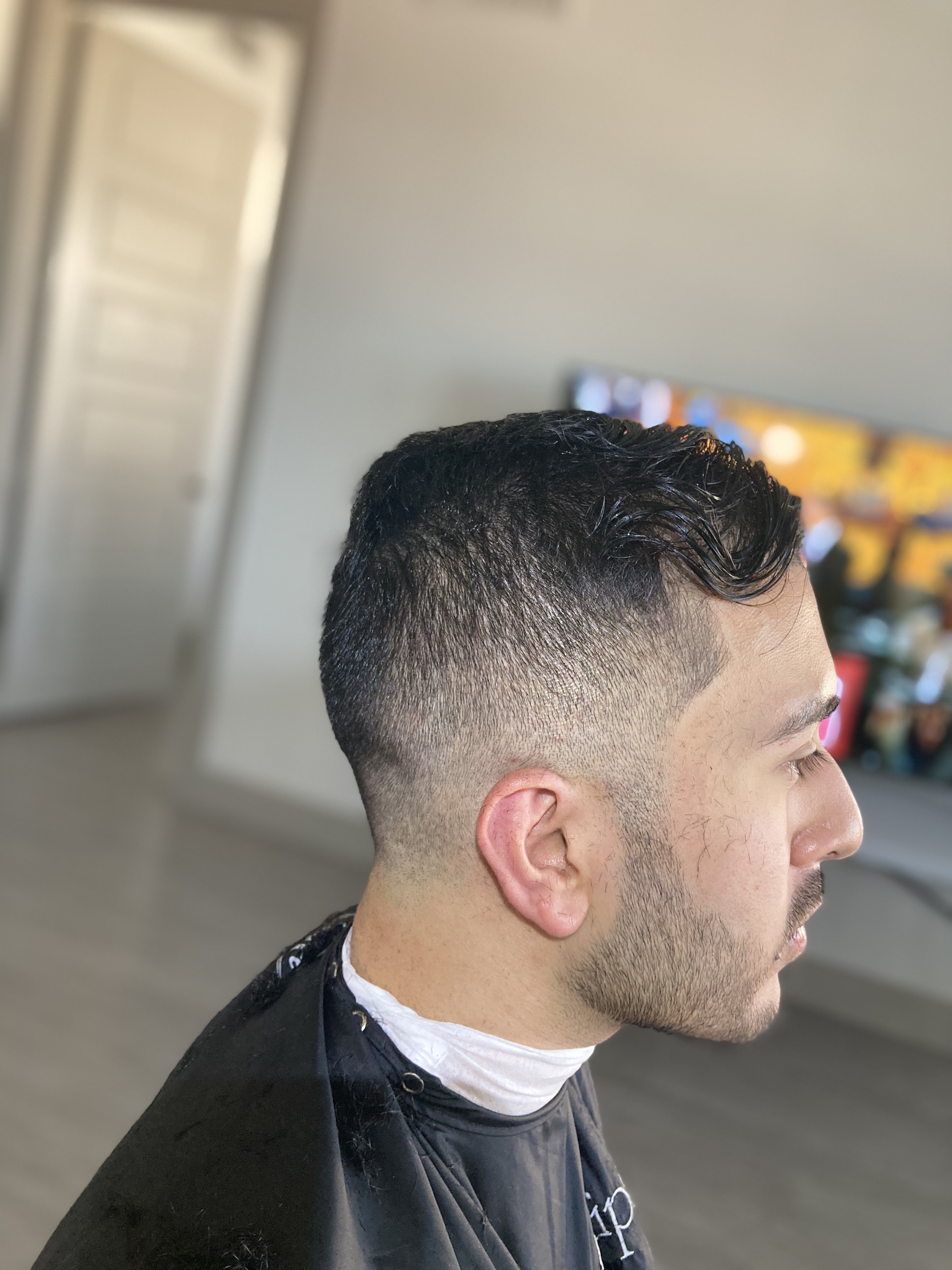
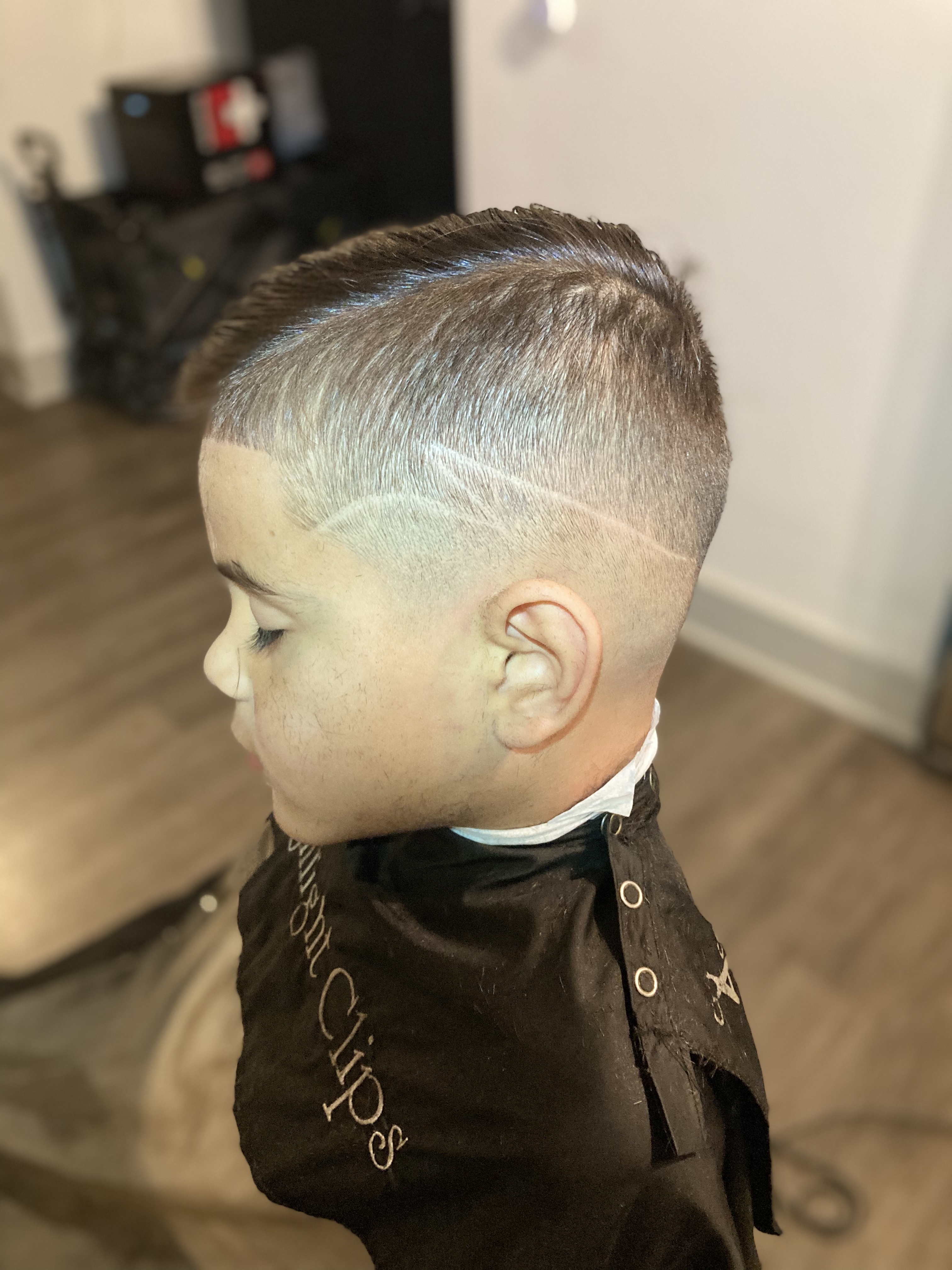
Fades are the most maintenance-intensive cut on this list, and that's the trade-off for how sharp they look. A skin fade — where the gradient goes all the way down to bare skin — starts to lose its crispness within 10 to 14 days as the shortest hair grows back in and softens the contrast. Most clients who want to keep a skin fade looking fresh book a touch-up every two weeks. If you can tolerate a little growth and want to stretch the schedule, three weeks is the outer limit before the fade starts looking more like a short taper than a fade. Our skin fades service covers the full range of fade options, and our guide to skin fades breaks down the differences between bald, high, mid, and low fades.
Low and mid fades are more forgiving
Low and mid fades are more forgiving because the gradient starts lower on the head, so the regrowth is less visible. A low fade — where the gradient starts just above the ears and at the nape — can stretch to three or four weeks before it loses its shape. A mid fade, starting around the temples, sits between the two: every three weeks is the sweet spot for most clients. If you're not sure which fade height suits you, our fade vs taper vs buzz cut comparison walks through how each one grows out and who each one suits.
How often should you get a taper?
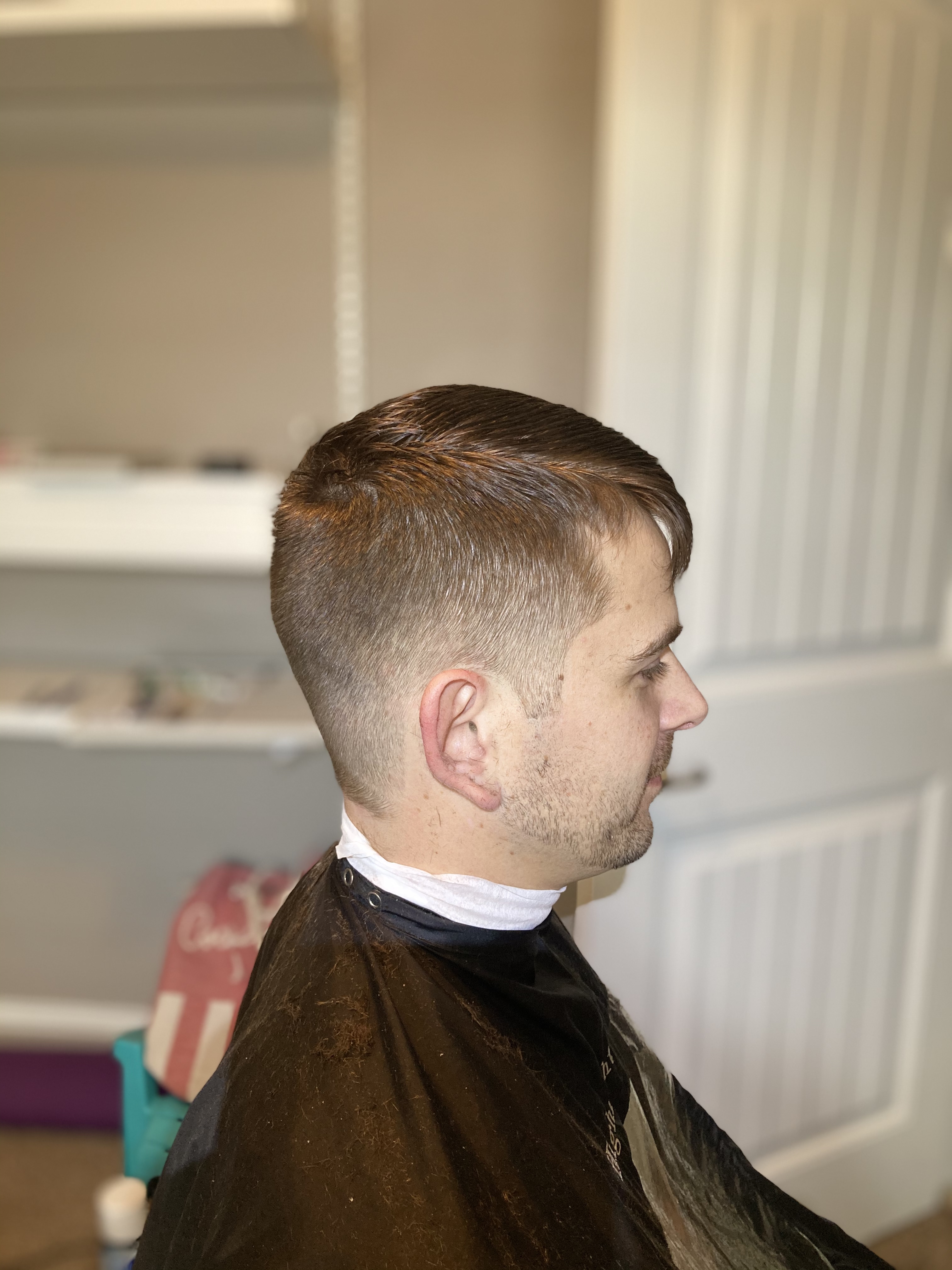
Tapers are the low-maintenance cousin of the fade, and that's exactly why so many DFW professionals choose them. A taper only affects the sideburns and the nape, leaving the bulk of the sides and back at a longer, more uniform length — so when it grows out, there's no dramatic gradient to lose. Most taper clients book a refresh every four to six weeks, and the cut still looks intentional at the five-week mark. If you work in a conservative office or just want a cut that doesn't demand your attention every two weeks, a taper is the right call. Our tapers service covers the options.
How often should you get a buzz cut?
Buzz cuts are the lowest-maintenance cut you can get — but they still need a refresh on a schedule. A short buzz (a #1 or #2 guard) starts looking uneven at about three weeks as different parts of the scalp grow at slightly different rates; a longer buzz (a #3 or #4) can stretch to four or five weeks before it loses its uniform look. The beauty of a buzz cut is that the refresh takes 15 minutes and there's no styling to maintain between cuts. If you want zero grooming friction in your daily routine, a buzz cut on a four-week cadence is hard to beat.
How often should you cut longer hair?
Longer hair — anything worn past a few inches on top, whether it's a scissor cut, a textured crop, or a longer style — needs a different kind of maintenance. The goal isn't keeping a gradient crisp; it's keeping the shape intact and removing split ends before they travel up the hair shaft and cause breakage. Most longer styles need a trim every six to eight weeks. Go longer than that and the ends start to fray, the shape loses its intentionality, and the hair starts looking like it's just growing rather than being styled. If you're growing your hair out, don't skip the trims — a light dusting every eight weeks keeps the growth healthy and prevents the mid-stage awkwardness from getting worse.
Hair type changes the schedule
Hair type changes the schedule in ways a lot of men don't account for. Coarse, straight hair shows every line and every regrowth — a fade on coarse hair looks sharper on day one but also shows fuzz faster, so plan for the shorter end of the range. Curly and coily hair (3A through 4C) holds a fade's gradient beautifully and tends to mask the earliest regrowth, so you can often stretch a fade an extra few days. Fine, straight hair shows scalp more readily and can look thin at the edges as it grows out, so a shorter cadence keeps it looking full. If you're not sure how your hair type affects your ideal schedule, ask your barber — at Highlight Clips, we cut every texture across the DFW metroplex and can recommend a cadence on the spot.
Lifestyle factors that move the schedule
Lifestyle moves the schedule too. If you're client-facing — sales, real estate, law, financial services — you probably want to be on the shorter end of every range because a fresh cut is part of your professional presentation. Our busy-professionals service is built around this exact use case. If you work from home and only see a camera on Zoom calls, you can stretch the cadence a week or two longer. If you have a specific event coming up — a wedding, a photo shoot, a big presentation — book the cut 7 to 10 days before so it's settled but still fresh; our wedding grooming timeline guide covers event-specific scheduling in depth.
- Client-facing roles — stay on the shorter end of every range.
- Work-from-home — you can stretch a week or two longer.
- Special events — book 7 to 10 days before so the cut has settled.
- Fast hair growth — move every cadence up by a few days.
- Slow hair growth — you can stretch every cadence by a week.
Book your next haircut on a schedule that works
Tell your barber what you do and how sharp you want to look, and we'll recommend a cadence that keeps you there. First-time clients get $10 off.
Signs you're overdue for a haircut
If you've lost track of your schedule, your hair will tell you. The signs you're overdue depend on the cut, but a few are universal. On a fade, the first sign is fuzz at the edges where the gradient used to be crisp — once you can see the line where the skin fade used to be, you're past due. On a taper, the nape and sideburns start looking shaggy and the clean line at the bottom disappears. On a buzz cut, the uniform length starts looking uneven, especially around the crown. On longer hair, the ends start to fray and the shape loses its intentionality. The neck line and the hairline around the ears are the first places every cut shows its age — if those look messy, it's time to book.
- Fuzz at the edges of a fade where the gradient used to be crisp.
- A shaggy nape or sideburns on a taper.
- Uneven length on a buzz cut, especially around the crown.
- Frayed ends or a lost shape on longer hair.
- A messy neck line or hairline around the ears — the first place every cut shows its age.
Building a recurring schedule that sticks
The clients who always look sharp aren't thinking about when to book their next cut — they've already booked it. A recurring schedule removes the decision entirely, and that's the single biggest upgrade you can make to your grooming routine. Most DFW clients book their next appointment before the barber leaves the current one: fades every two to three weeks, tapers every four to six weeks, buzz cuts every three to five weeks, longer hair every six to eight weeks. Recurring clients often set up a standing appointment so the slot is theirs automatically and they never have to think about it. If you're in Dallas, Plano, Frisco, or anywhere across the DFW metroplex, we'll come to you on the cadence you choose — and our Dallas mobile barber city page covers the specifics for Dallas clients.
Pairing your haircut with a beard trim is the other lever that keeps your whole look intentional. A beard grows on its own schedule, and a haircut that's fresh paired with a beard that's two weeks overdue looks unfinished. If you wear a beard, book the trim on the same cadence as the cut — every two to four weeks for a short beard, every four to six weeks for a longer one. Our beard grooming guide covers the full beard maintenance schedule, and our grooming packages bundle the cut and beard work together at a better per-service price. Beard grooming guide · Grooming packages.
The bottom line
The bottom line is that there's no single right answer — but there is a right answer for you, based on your cut, your hair, and your life. Fades every two to three weeks. Tapers every four to six weeks. Buzz cuts every three to five weeks. Longer hair every six to eight weeks. Adjust up or down based on how fast your hair grows, how sharp you want to look, and how client-facing your day-to-day is. The moment you stop thinking about when to book your next cut is the moment your grooming routine is working — and a recurring mobile barber appointment is the simplest way to get there.
Frequently Asked Questions
How often should a man get a fade haircut?
A skin fade needs a touch-up every 2 to 3 weeks to keep the gradient crisp — the shortest hair grows back within 10 to 14 days and softens the contrast. Low and mid fades are more forgiving and can stretch to 3 to 4 weeks before they lose their shape.
How often should I get a taper haircut?
Most taper clients book a refresh every 4 to 6 weeks. Tapers only affect the sideburns and nape, so they grow out gracefully and don't demand the two-week cadence a fade does. If you want a low-maintenance cut that still looks intentional at five weeks, a taper is the right call.
How often should you cut longer hair?
Longer styles need a trim every 6 to 8 weeks to keep the shape intact and remove split ends before they cause breakage. If you're growing your hair out, don't skip the trims — a light dusting every 8 weeks keeps the growth healthy.
Does hair type change how often I should get a haircut?
Yes. Coarse, straight hair shows regrowth faster, so plan for the shorter end of every range. Curly and coily hair holds a fade's gradient longer and masks early regrowth, so you can stretch a few extra days. Fine, straight hair shows scalp as it grows out, so a shorter cadence keeps it looking full.
What are the signs I'm overdue for a haircut?
On a fade, fuzz at the edges where the gradient used to be crisp. On a taper, a shaggy nape or sideburns. On a buzz cut, uneven length around the crown. On longer hair, frayed ends or a lost shape. The neck line and hairline around the ears are the first places every cut shows its age.
Should I book my next haircut before the current one ends?
Yes — that's the single biggest upgrade you can make to your grooming routine. Booking your next slot at the end of your current appointment locks in your preferred time and keeps your grooming on a predictable cadence. Recurring clients often set up a standing appointment so they never have to think about scheduling.
Marcus Johnson
Highlight Clips Mobile Barber
Marcus Johnson is the founder of Highlight Clips and a master barber with over 12 years of experience specializing in precision fades and textured hair styling across the Dallas-Fort Worth area.